Part 1 : This article
Chapter 1: Welcome to the World of Onsen – Beyond the Steam
Chapter 2: Preparation is Key – For the Perfect Onsen Experience
Part 2 :
Chapter 3: The Biggest Concern: The Tattoo Question
Chapter 4: The Onsen Ritual: A Step-by-Step Guide
Part 3 :
Chapter 5: The Art of Exiting – Etiquette After the Bath
Chapter 6: Conclusion: You are an "Onsen Master"
Chapter 1: Welcome to the World of Onsen – Beyond the Steam
For many travelers visiting Japan, the "Onsen" experience is a highlight of the trip. However, surrounded by locals relaxing in the nude, many visitors feel anxious about the seemingly complex etiquette and rules. This guide is designed to alleviate that anxiety, comprehensively explaining everything a foreign traveler needs to know—from the cultural background of onsen to step-by-step bathing procedures and expert-level advanced knowledge.
Section 1.1: What is "Onsen"?
The first thing to understand is that Japan's "Onsen" is not exactly the same as the English "Hot Spring". An onsen is not merely geothermally heated, mineral-rich water ; for centuries, it has played a deep cultural role in Japanese life as a place for "purification," "relaxation," and "socializing."
At the root of Japanese onsen culture is the phrase "Hadaka no Tsukiai" (naked communion). This signifies a space where everyone is equal, having cast off the "armor" of clothing and social status. This cultural background is the very core of the seemingly strict onsen etiquette. All rules stem from consideration for others, ensuring this equal and sacred "yu" (hot water) can be comfortably shared by all. The principle is summarized in one point: "Do not dirty the bathwater that everyone shares".
Section 1.2: Types of Onsen and Basic Terminology
Knowing a few basic terms before your visit is helpful. The experience and necessary preparations differ depending on the facility.
- Onsen Ryokan: A traditional Japanese inn with attached onsen facilities. The accommodation fee usually includes the bathing fee, towels, and amenities.
- Higaeri Onsen (Day-trip Onsen): A facility for bathing only, without an overnight stay. The fee is relatively inexpensive, but you may need to bring your own towels or rent them separately.
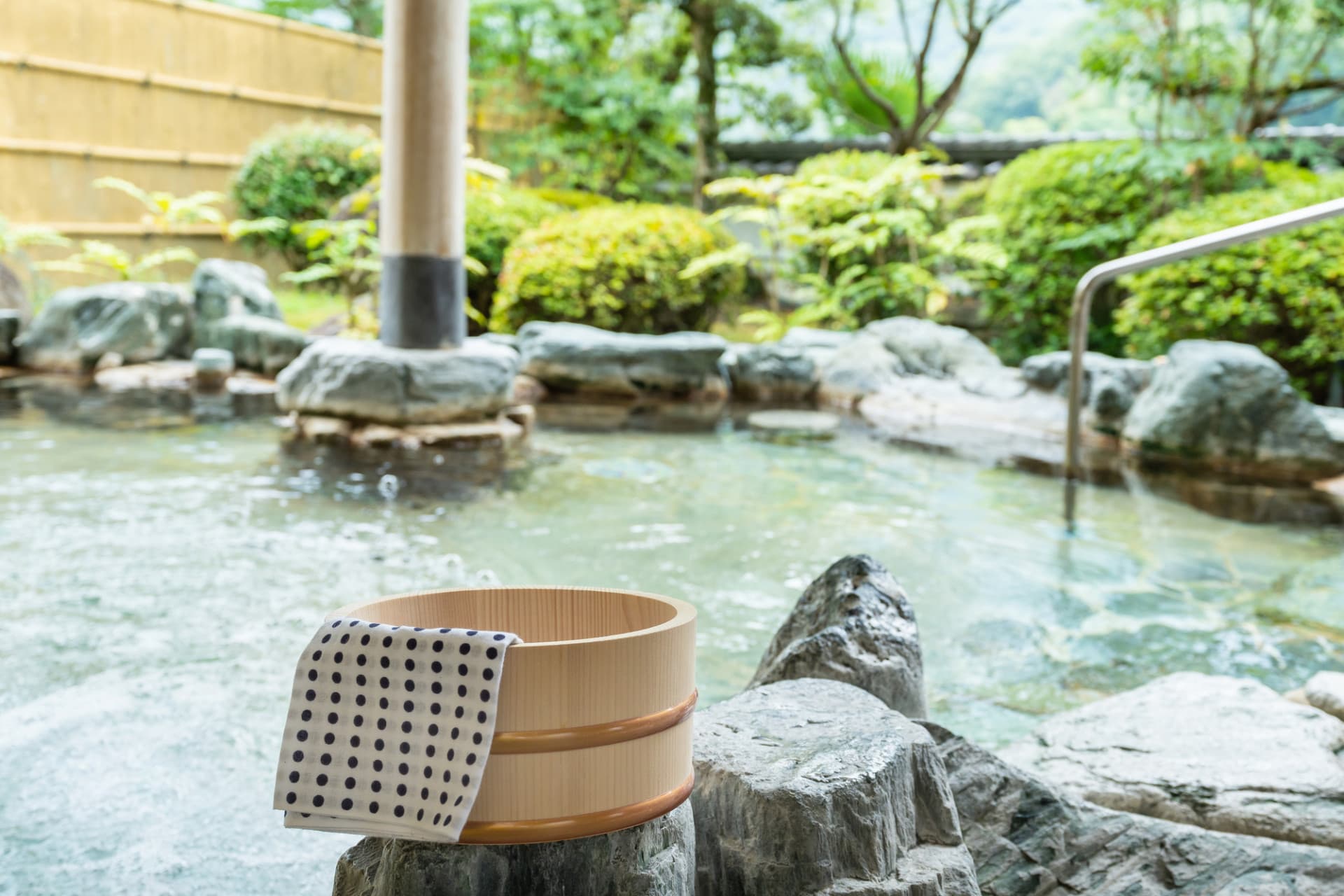
- Rotenburo (Open-air Bath): A bath set up outdoors. These are extremely popular as you can bathe while enjoying natural scenery and the fresh air.
- Uchiyu (Indoor Bath): Refers to a bath inside a building. Traditionally, it meant the bath within a ryokan , but today it is generally used as the antonym to "Rotenburo."
- Kashikiriburo (Private-use Bath): A private bathroom that can be rented by the hour, popular with families, couples, or those who value privacy. It can also be a solution for those with tattoos.
- Senshitsu (Water Quality): The type of mineral components in the onsen. This indicates the health benefits. For example, "acidic springs" are said to have high sterilizing effects, while "alkaline springs" are called "Bijin no Yu" (beauty baths) because they help remove dead skin cells.
Chapter 2: Preparation is Key – For the Perfect Onsen Experience
To fully enjoy the onsen, advance preparation, especially checking your belongings, is crucial. What you need fundamentally differs depending on whether you are going to a "Ryokan" or a "Higaeri Onsen."
Section 2.1: "Ryokan" vs. "Higaeri Onsen": The Common Sense of Amenities
- In the case of an Onsen Ryokan If you are staying overnight at an onsen ryokan, there is little to worry about. It is common for the accommodation fee to include everything: bath towels, face towels, yukata (room wear), and basic amenities like shampoo, conditioner, body soap, and a toothbrush. You can head to the bath empty-handed.
- In the case of a Higaeri Onsen (Day-trip Onsen) The situation is very different at day-trip onsen or "Sento" (public bathhouses).
- Towels: Most facilities charge for towel rentals or sales. If you want to save costs, be sure to bring your own.
- Amenities: While shampoo, conditioner, and body soap are often provided , smaller sento may have none at all.
- Skincare Products: Cleansing oil (makeup remover), toner, and lotion are rarely provided, except at high-end spa facilities. It is strongly recommended to bring your own.
Section 2.2: Onsen Packing List (for Higaeri Onsen)
Here is the ideal packing list for a day-trip onsen.
- Essential Items
- Cash (especially coins): Coins are often needed for vending machines at the entrance, lockers (many require a 100-yen coin that is returned after use), dryers (which may be pay-per-use ), and vending machines for cold milk after the bath.
- Two Towels (see below): For the "two-towel" system described later, you need one large bath towel and one small face towel.
- Change of Clothes: Fresh underwear and socks are especially important to feel comfortable after bathing, in case you sweat. (Note: was associated with ryokan amenities in the original text, but and support the need for clothes/underwear for day-trip onsen).
- Recommended Items
- Plastic Bag: Extremely useful for putting wet towels or used undergarments in. (Note: was also cited here, likely referring to general travel packing, but and are specific to day-trip bath needs).
- Amenities: If you have sensitive skin or want to use your usual products, bringing a travel set of shampoo, conditioner, and skincare provides peace of mind. (Note: was also cited, likely in the context of general travel preferences).
- Hair Tie or Shower Cap: Essential for those with long hair. As mentioned later, letting your hair touch the bathwater is strictly forbidden.
- Spa Bag: A small, waterproof (mesh or vinyl) bag for carrying your amenities into the bathing area. (Note: refers to general items, specifically mentions spa bags).
Section 2.3: The Most Important Item: The Role of the "Two Towels"
The handling of towels is where foreign travelers are most often confused and make mistakes. In a Japanese onsen, the "large towel" and "small towel" have distinct roles. Understanding this "two-towel" system is the biggest key to avoiding a breach of etiquette.
- The Large Towel (Bath Towel)
- Role: Used to completely dry your body after you return to the dressing room.
- Location: Left behind in your locker or basket in the dressing room.
- Strictly Prohibited: Must not be brought into the bathing area (washing area or bathtub).
- The Small Towel (Face Towel)
- Role: This is the multifunctional tool that is key to "onsen mastery."
- Location: Brought with you into the bathing area.
- Functions:
- Washing the body: Can be used as a washcloth with soap, in place of a nylon towel or sponge.
- Modesty Cover: Used to cover your front when walking naked from the dressing room to the washing area, or from the washing area to the tub.
- Wiping sweat: Used to wipe sweat from your face or head outside the bathtub while soaking.
- Placing on head: The traditional spot to keep the towel so it doesn't fall into the bath while you soak.
- Drying (lightly): Used to lightly wipe water droplets from your body just before returning from the bathing area to the dressing room.
Many people might feel a contradiction between the two rules: "Do not put your towel in the bathtub" and "Wipe your body before returning to the dressing room". The core concept is: The "small towel" can get wet from washing or wiping, but it must not be "dipped" into the bathtub water. The answer to upholding these two crucial manners—not contaminating the tub and not soaking the dressing room floor —lies in understanding the logistics of this "small towel."
Part 2: The Complete Guide to Japan's Hot Springs for Foreign Travelers, Part 2
Part 3: The Complete Guide to Japan's Hot Springs for Foreign Travelers, Part 3